• Home
  • About
  • Cutting Tools
    • Carbro
    • CFT - George Whalley
    • Dummel
    • Everede Tool
    • Fullerton Tool
    • Inovatool
    • Lexington Cutter
    • Nine 9
    • Regal
    • Rockhard
    • Rocky Mountain Twist
  • Equipment
    • Alpha Tools
    • Boneham
    • FRB America
    • Haimer
    • Hangsterfer's
    • Llambrich
    • MRO Solutions
    • Precision Brand
    • SCM Tapholders
    • Tuffy Products
  • News
  • Contact
Browne & Co
  • Home
  • About
  • Cutting Tools
    • Carbro
    • CFT - George Whalley
    • Dummel
    • Everede Tool
    • Fullerton Tool
    • Inovatool
    • Lexington Cutter
    • Nine 9
    • Regal
    • Rockhard
    • Rocky Mountain Twist
  • Equipment
    • Alpha Tools
    • Boneham
    • FRB America
    • Haimer
    • Hangsterfer's
    • Llambrich
    • MRO Solutions
    • Precision Brand
    • SCM Tapholders
    • Tuffy Products
  • News
  • Contact

Optimizing Machining Efficiency: Selecting the Right End Mill Features Based on ISO 513 Material Classification

5/14/2024

0 Comments

 
by Bernard Martin

Explore the role of end mill components in machining various materials with our guide on selecting the right features based on ISO 513 classifications, enhancing machining efficiency and tool life.
How to Select the Correct End Mill

The components of an end mill play a crucial role in determining its performance and suitability for machining different materials. The best way to understand the importance of different features of an end mill is start with the material you are cutting.  Just like a butter knife is not good for cutting steak, selecting features for an end mill is very dependent upon the material you're cutting.

Let's start with some background information.  The ISO 513 is a standard that classifies materials based on their machinability and provides guidelines for cutting speeds, feeds, and tool selection. ISO 513 provides a classification system for the machinability of materials, organizing them into categories based on the characteristics which influence their behavior during machining processes. The main categories include:
  • ISO P for steels
  • ISO M for stainless steels and super alloys
  • ISO K for cast iron
  • ISO N for non-ferrous metals
  • ISO S for heat-resistant super alloys
  • ISO H for hardened materials.
Each category is tailored with specific recommendations for cutting speeds and feeds to optimize machining efficiency, tool life, and surface quality. This standard serves as a guideline for manufacturers and machinists to select the most suitable cutting tools and parameters for machining different material types, thereby enhancing productivity and reducing costs.

Now, let's dig into the details. Below you'll find the key components of an end mill and how they relate to machining different ISO 513 material types:
  1. Core Diameter: The core diameter of an end mill refers to the diameter of the solid, central part of the tool. It affects the tool's strength and rigidity. When machining harder materials (e.g., ISO P and ISO K materials), it's often advisable to use end mills with a larger core diameter to ensure stability and reduce the risk of tool deflection or breakage. For softer materials (e.g., ISO M and ISO N materials), a smaller core diameter may suffice.
  2. Helix Angle: The helix angle is the angle formed by the flute helix and a line parallel to the end mill's axis. It affects chip evacuation, tool rigidity, and cutting forces. A higher helix angle (e.g., 45 degrees) is often suitable for softer materials as it helps with chip evacuation and reduces cutting forces. In contrast, a lower helix angle (e.g., 30 degrees) provides better tool rigidity and may be preferable for harder materials.
  3. Edge Preparation (Edge Prep) Types: Edge preparation refers to the treatment of the cutting edges of the end mill to improve tool life, performance, and surface finish. The choice of edge prep type can vary depending on the material being machined:
    • Uncoated: Suitable for general-purpose use on a wide range of materials.
    • TiN (Titanium Nitride) Coating: Provides good wear resistance and can be used for ISO M and ISO N materials.
    • TiCN (Titanium Carbonitride) Coating: Offers better wear resistance than TiN and is suitable for a wider range of materials, including ISO P and ISO K materials.
    • TiAlN (Titanium Aluminum Nitride) Coating: Provides high-temperature stability and is effective for machining ISO S and ISO H materials, as well as stainless steels.
  4. Number of Flutes: The number of flutes on an end mill affects chip evacuation, surface finish, and cutting speed. The choice of the number of flutes can vary with material type:
    • 2 Flutes: Typically used for softer materials to aid in chip evacuation and reduce cutting forces.
    • 3 Flutes: A versatile option suitable for a wide range of materials.
    • 4 Flutes or More: Provide more cutting edges and are often used for harder materials where higher feed rates can be achieved while maintaining surface finish.
When selecting an end mill for a specific ISO 513 material type, it's important to consider factors like material hardness, workpiece geometry, cutting parameters (e.g., cutting speed and feed rate), and desired surface finish. Additionally, referring to machining guidelines and consulting with tool manufacturers can help you make informed decisions about the components of the end mill and their suitability for the machining task at hand.
​

End Mill Anatomy Overview

What are the Most Important Components of an End Mill for your Material? Fullerton Tool.
The anatomy of an end mill refers to its various components and features, each of which plays a critical role in its cutting performance. End mills are rotary cutting tools used in milling operations to remove material from a workpiece.

​Here's a breakdown of the key parts of an end mill:
  1. Shank: The shank is the cylindrical portion of the end mill that is designed to be held in the tool holder of a milling machine. It provides a means for securing the end mill in the machine spindle. Shank diameters can vary and must match the tool holder.
  2. Flutes: Flutes are the helical or spiral-shaped grooves that run along the length of the end mill. They are the primary cutting edges of the tool. The number of flutes can vary; common options include two, three, four, or more flutes. The choice of the number of flutes depends on factors like material type, desired surface finish, and machining conditions.
  3. Cutting Edge: The cutting edge is the sharpened portion of each flute where material removal occurs. It's where the actual cutting action takes place. The quality of the cutting edge, including its sharpness and geometry, greatly influences cutting performance.
  4. Flute Length: The flute length is the portion of the end mill's length that includes the flutes. It determines how deeply the end mill can cut into the workpiece in a single pass. Longer flute lengths are suitable for deeper cuts, while shorter flute lengths are typically used for shallower cuts.
  5. Overall Length: The overall length of the end mill includes the shank and flute length. It's important to consider the overall length when choosing a tool to ensure it can reach the required depth within the workpiece without interference.
  6. Helix Angle: The helix angle is the angle formed by the helical flutes and a line parallel to the end mill's axis. It influences chip evacuation, cutting forces, and tool rigidity. The choice of helix angle can vary depending on the material being machined and the desired cutting characteristics.
  7. Corner Radius: Some end mills have a corner radius instead of a sharp corner at the bottom of the cutting edge. This radius can improve tool life, reduce stress concentrations, and enhance surface finish, especially in contouring and profiling operations.
  8. Coatings: Many modern end mills feature coatings or surface treatments to improve wear resistance and tool life. Common coatings include TiN (Titanium Nitride), TiCN (Titanium Carbonitride), and TiAlN (Titanium Aluminum Nitride), among others. The choice of coating depends on the material being machined.
  9. Flute Design: The design of the flute can vary, and it may include features like variable flute geometry, chip breakers, or special profiles to optimize chip evacuation and performance for specific applications.
  10. Tool Diameter: The tool diameter refers to the maximum width of the end mill and determines the size of the cut it can make. End mills are available in various diameters, and the selection depends on the machining requirements.

0 Comments

5 Common Reaming Problems and Solutions

4/20/2022

0 Comments

 
edited by Bernard Martin

Lexington Cutter has a put together a short checklist of the five most common problems for addressing reaming problems.  If these don't fix your particular problem, get in contact with us and we'll send one of our application specialist in to give you a hand.
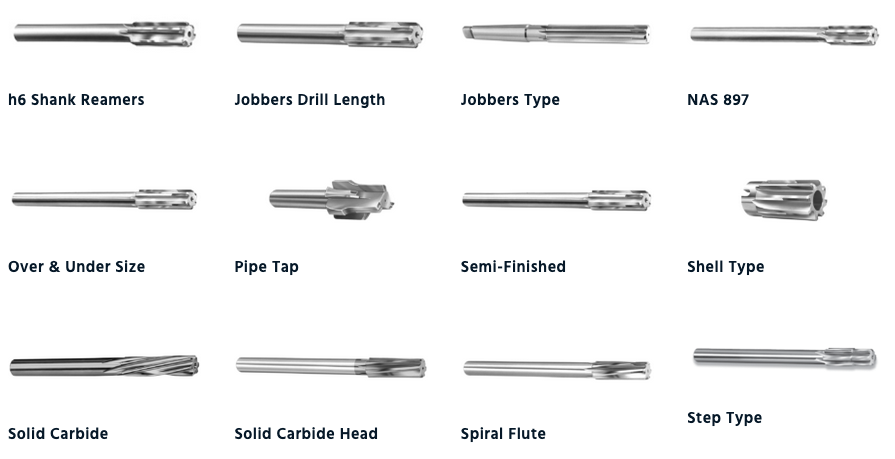
Lexington Cutter Reamers h6 Jobbers drill NAS 897 Over under Pipe Tap Shel type Solid Carbide Spiral Flute Step Type
1) Poor Finish

Possible Causes – Unequal chamfers, Incorrect margins, Excessive spindle runout, Chatter
Possible Solutions – Regrind reamer with equal chamfer angle. Regrind reamer with narrow margins for reaming lower tensile materials. Increase reamer back taper (will lose size faster). Reduce speed and increase feed rate. Use power feed unless material is hard. Use right or left spiral fluted reamer. Grind secondary lead angle immediately back of 45° chamfer.

2) Oversize Hole - Taper Hole - Bell Mouth Hole - Poor Finish

Possible Causes – Misalignment, Insufficient, cutting action
Possible Solutions – Use bushing – .0002″/.0003″ over reamer diameter. If hole location varies, use floating reamer holder. Increase reamer back taper (will lose size faster). Specify reamer with positive radial rake to reduce cutting pressure – may produce slightly larger diameter holes.

3) Excessive Tool Wear

Possible Causes – Insufficient stock for removal, Excessive reaming pressure, Misalignment
Possible Solution
s – Decrease previous operation drill size to allow more material for removal by reamer – leave about 3% of hole diameter for cast iron and more stock for non-ferrous materials. Increase feed rate. Reduce stock to be removed by increasing previous operation drill size – leave about 3% of the hole diameter. See Problem #2

4) Crooked Holes

Possible Causes – Not drilled straight
Possible Solutions – Correct previous drilling operation – reamer will follow the drilled hole. Increase reamer attack angle (chamfer) to 120°/180° included angle.

5) Tool Breakage

Possible Causes – Excessive reaming pressure, Misalignment
Possible Solutions – Reduce stock to be removed – See Problem #3 – See Problem #2
0 Comments

Metalcutting Circular Saw Cutting Recommendations, Tips, Tricks & Troublshooting

3/18/2021

8 Comments

 
compiled & edited by Bernard Martin
Martindale Gaylee Carbide HSS Saw Selection troubshooting tips tricks
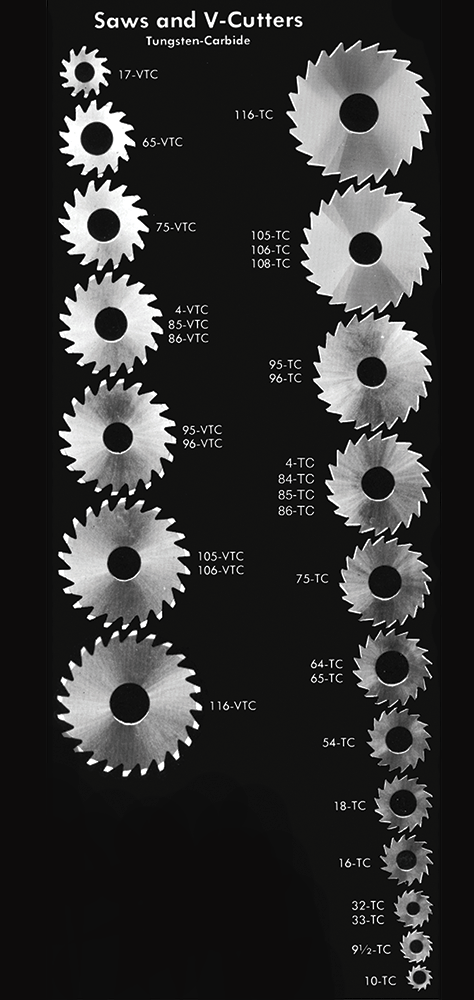
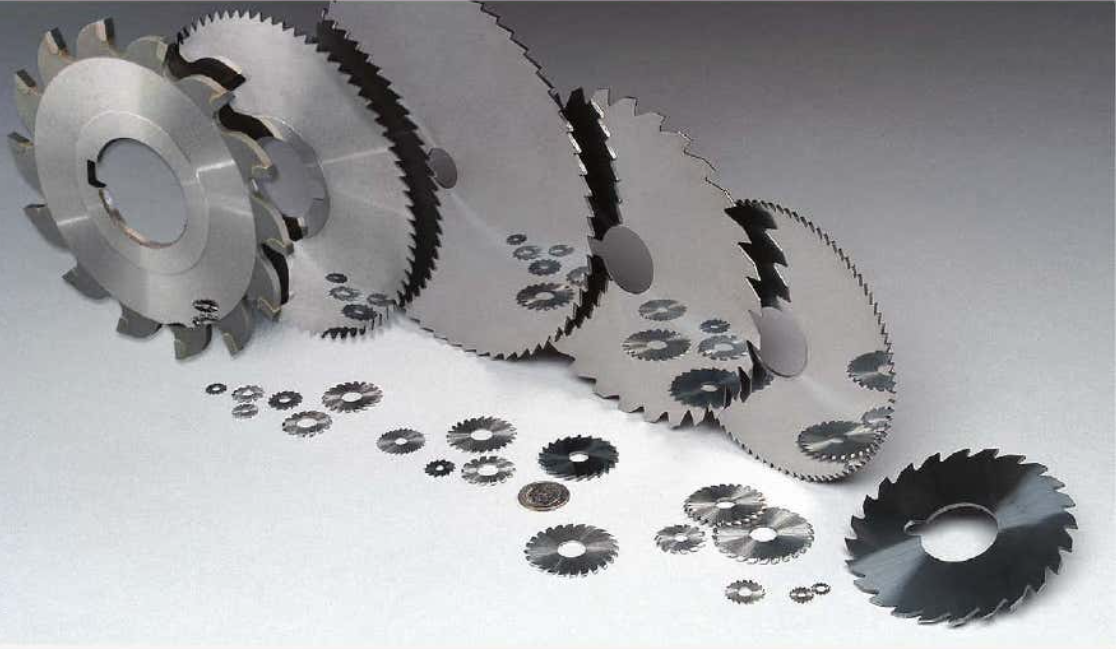
As more and more of our customers are using Martindale Gaylee Circular saws we put together this guide to the commonly asked questions such as "Is there a rule-of-thumb for the number of teeth?" or "How much side clearance should I have?" Here we cover a lot of the fundamentals of selecting the right circular saw blade configuration, some tips, tricks, and troubleshooting for when things go wrong. 

Circular Saw Feed Rates

These are general cutting speed recommendations for circular saws used in metalcutting from Martindale/Gaylee. The may vary from application to application but are basically some general suggestions starting parameters when using high speed or carbide saws. 
  • HSS Saws: .002”-.006”  (IPT-inch. per tooth / CLPT-chip load per tooth)
  • Carbide Saws: .0002”-.0015”  (IPT -inch. per tooth / CLPT - chip load per tooth)
This is a conservative recommendation as a starting point for feed rates, and may vary depending on material being cut and cutting speed (SFPM).

Selecting the Proper Number of Teeth in Your Metalcutting Saw

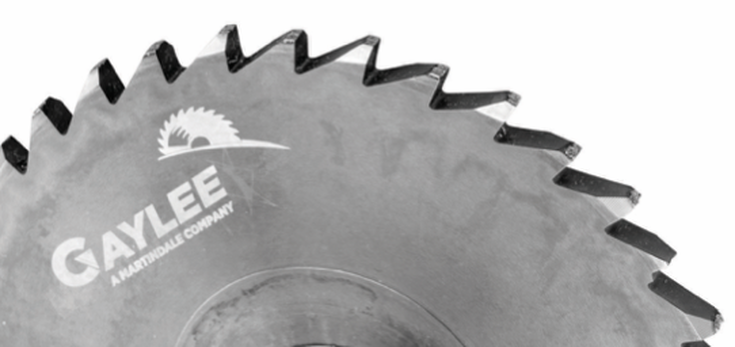
Generally speaking, deep cuts and soft material require fewer teeth for chip clearance and stronger teeth (landed) Thin material requires more teeth, but keep-in-mind that at least 2 teeth on the blade need to be engaged in cut.
Saw-TC-Undercutting-Saw
Hard materials and narrow slots (under .025”) likewise require more teeth.

Hard Materials require more teeth, and  give a smoother cut,  but at a much lower production rate.  ​

Alternately beveled teeth keep chips from sticking in the cut and in the tooth gullets.

And Remember that there should be at least 2 teeth engaged in the cut at all times.
Increase Number of Teeth For:
  • Thin material 
  • Thin cuts under .025”
  • Slow spindle speeds
  • Hard material
  • Sand castings 
  • Thin castings 
  • Work hardened materials
  • Known inclusions or Hard spots 

Decrease Number of Teeth For:
  • Free cutting material​
  • Soft Gummy long chipping materials.
  • Deep cuts (over 1/4”)
  • High speeds Machining Applications
  • Chip clearance and tooth strength (Consider Metal Slitting or Copper Slitting style saws.)

Rake Angles and Side Clearance Angles

SIDE CLEARANCE (Tangential Clearance Angle)
This is also known as dish or hollow grind.  You measure down the side of the tip and the difference it is the difference between front and back.  As you cut, material it gets compressed and springs back after the cutting edge passes.

​A steep side clearance angle gives plenty of room for the material to expand and prevents thermal expansion of the base material.  Keep in mint that a very flat side clearance angle can provide a smoother cut in some materials.  For stainless steel and tenacious metals such as copper, zinc, tin or lead an increase in the side clearance is desirable as these materials tend to "spring back" (thermal expansion) on the blade. 

RAKE ANGLES
Rake angle is the term used to describe the direction of the blade’s teeth, as referenced from the rotation and central axis of a saw blade. If you imagine a line going from the exact center of the blade to each tooth, having the front of the tooth directly on that line would be a zero degree rake angle. The rake angle of the blade is described in comparison to that imaginary line.

A positive rake angle meana that the teeth are angled more towards the angle of rotation, while a negative rake angle would mean that they are angled backwards, away from the direction of rotation. Generally speaking, the preferred rake angle is:
  • 5° to 10° positive for other soft materials.
  • 5° negative for yellow brass
  • On center for steel.
Why do Carbide Saws Break?

Why do Circular Saw Blades Break?

It's commonly known that when saw thickness is less than 0.125″, keyways can cause stress risers and cracks.  That is why washers are often used.  However, Breakage, Wobble and Rubbing problems are often caused by how the washers are mounted on either side of saw. 

Remember, washers drive the saw in the absence of a drive key. They must always be clean, flat and bur-free. A speck of dirt will let saws wobble and cut oversize. 

If a saw breaks, it may score the washers. Always check for scoring marks around saw hole for dirt, chips or grit.  Shiny spots, as small as a pinpoint, indicate that chips where imbedded under washers.

Circular skid marks indicate the nut was not tight.

Generally speaking:
  • Thin saws should especially be supported by washers as large as possible.
  • Washers must be of equal diameter or they will flex out saw dish and cause one side of saw to rub.
  • The nut must be wrench-tight.

Saw Blade Teeth most often break as a result of:
  • Too high a feed rate.
  • Spindle bearings are worn.
  • Drive belts  are loose or sheaves worn.
  • Improper tightening: If saw blade pauses momentarily in its rotation while feed advances, it WILL break.
  • Workpiece indexed before the saw has cleared the slot.
  • Improper workholding - The workpiece not tight or not well supported.
  • Saw is dull, even the best tools do eventually wear out.

NOTE: HSS saws will turn colors as they heat during cutting. A straw color is the limit. The saw will lose its temper when it starts turning blue.
8 Comments

    Author

    We've compiled the latest news and technical information about our principals and our market that we hope you find informative!

    RSS Feed

    Archives

    August 2025
    July 2025
    June 2025
    May 2025
    April 2025
    March 2025
    February 2025
    January 2025
    December 2024
    November 2024
    October 2024
    September 2024
    August 2024
    July 2024
    June 2024
    May 2024
    April 2024
    March 2024
    February 2024
    January 2024
    December 2023
    November 2023
    October 2023
    September 2023
    August 2023
    July 2023
    June 2023
    May 2023
    April 2023
    March 2023
    February 2023
    January 2023
    December 2022
    November 2022
    October 2022
    September 2022
    August 2022
    July 2022
    June 2022
    May 2022
    April 2022
    March 2022
    February 2022
    January 2022
    December 2021
    November 2021
    October 2021
    September 2021
    August 2021
    July 2021
    June 2021
    May 2021
    April 2021
    March 2021
    February 2021
    January 2021
    December 2020
    November 2020
    October 2020
    September 2020
    August 2020
    July 2020
    June 2020
    May 2020
    April 2020
    March 2020
    February 2020
    January 2020
    December 2019
    November 2019
    October 2019
    September 2019
    August 2019
    July 2019
    June 2019
    May 2019
    April 2019
    March 2019
    February 2019
    January 2019
    December 2018
    November 2018
    October 2018
    September 2018
    August 2018
    July 2018
    June 2018
    May 2018
    April 2018
    March 2018
    February 2018
    January 2018
    November 2017
    October 2017
    September 2017
    August 2017
    July 2017
    May 2017
    March 2017
    February 2017
    January 2017
    December 2016
    November 2016
    October 2016
    September 2016
    July 2016
    June 2016
    May 2016
    April 2016
    March 2016
    February 2016
    January 2016
    June 2015
    April 2015
    March 2015
    February 2015
    January 2015
    December 2014
    October 2014
    September 2014
    August 2014
    July 2014
    June 2014
    May 2014
    April 2014
    March 2014
    February 2014
    January 2014
    December 2013
    October 2013
    September 2013
    April 2013
    February 2013
    September 2012
    February 2012
    October 2011
    July 2011
    April 2011
    January 2011
    November 2010
    October 2010
    August 2010
    April 2010
    February 2010
    July 2009
    January 2009
    July 2007

    Categories

    All
    Abrasives
    Advanced Chemical Solutions
    Aerospace
    AirLoc
    Allen Benjamin
    Alpha Tool
    AlumaMill
    Arno Fast Change
    Arno USA
    Asimeto
    Award
    Back Chamfer
    Besly
    Beveling Base Starter Kit
    Bishop Lifting Products
    Boneham
    Boring
    Boring Bars
    Brian Martin
    Browne & Co.
    Carbide Cutting Tools
    Carbide Drills
    CAT40
    CAT50
    Catalog Download
    Chain Hoists
    Chamfer
    Chip Thinning
    Circular Saws
    Clamping
    Coating
    Coolant
    Coronovirus
    Countersinks
    Custom Tooling
    Cutting Tools
    Dapra
    Dapra GRIPP FORCE 5
    Dapra Vapor
    Dapra Volum3
    Deburring
    Deep Hole Drilling
    Drill Bushing
    Drill Chucks
    Drilling
    Drill Points
    Drills
    Dummel
    Dümmel
    End Mill
    Endurance Carbide
    ER Colllet
    ERGO
    Everede
    Everede Tool
    Facedrivers
    Fantom
    Feeler Gage
    Flap Wheels
    Forged Wheels
    FRB America
    Fullerton Tool
    Fury
    Gage Reconditioning
    Gaylee Saws
    Gear Cutting Tools
    Gemtex
    George Whalley
    Grinding Tools
    Grooving
    GWS Tool Group
    Haimer
    Haimer USA
    Hangsterfer's
    Harmon-i-Cut
    HB Rouse
    HSK
    H Tolerance
    Hydromat
    IBC
    IMTS
    Industrial Supply Assoc
    InovaTool
    Inserts Boring
    Inserts - Boring
    Inserts Grooving
    Inserts - Grooving
    Inserts Milling
    Inserts Parting
    Inserts - Parting
    Inserts- Turning
    Intimidator
    ISA Industrial Supply Assoc
    ISO-9001
    Jergens
    Koenig Expander
    Lexington Cutter
    Live Center
    Llambrich
    Lubricants
    Machining Cloud
    Made In USA
    Manufacturing
    Martindale Saws
    Mastercam
    Material: Aluminum
    Material: Bronze
    Material: Cast Iron
    Material: Chromium
    Material: Copper
    Material High Temp
    Material: Inconel
    Material: Plastics
    Material: Steel
    Material: Titanium
    Measuring Tools
    Memorial Day
    Metals
    Metalworking
    Metalworking Fluid
    Metrology
    Mill Turn
    Minimill
    MRO
    Multifunctional Tool
    Nanotech 7000
    NASA
    NATC
    NC Helix Drill
    Nine9
    North American Tool
    Ohio
    Peel Milling
    PMTS
    Polisher
    Precision Brand
    Promotions
    Punches
    QR Code
    Reamers
    Regal
    Regal Beloit
    Regal Cutting Tools
    Rep Of The Year
    RMT Rocky Mountain Twist
    Roll Form Taps
    Rouse Arno
    Rouse - Arno
    Safeway Sling
    Sales
    Sales Tools
    Saw
    Saw Arbors
    SCM
    Screw Threads
    Scully-Jones
    Shim Stock
    Shrink FIt
    Sling Inspection
    Sling Safety
    Slip Plate
    Sowa
    Spade Drills
    Special Cutting Tools
    Special Tools
    Spot Drill
    S&R Products
    Stonecutter
    Swiss Machining
    Tap: Carbide
    Tap: Carbide Insert
    Tap Chamfer
    Tap Definitions
    Tap: Extension
    Tap: Metric
    Tapping
    Tap: Pulley
    Taps
    Tap: STI
    Tap: Thread Forming
    Technical Support
    Tecnologie FRB
    Thread Gaging
    Threading
    ThreadMills
    Thread Tap App
    Threadwell
    TIMill
    Tire Mold
    Tool Balancing
    Tool Black
    Toolholders
    Tool Presetter
    Tool Selection
    Tool Wrap
    Trochoidal Milling
    Troubleshooting
    Tuffy Products
    Turning Tools
    Ultramini
    Valspar
    Vexcel Grinding Disc
    Vibration Pads
    Vises
    V-Mac
    Weldon Flat
    Workholding
    YG-1

    RSS Feed

HOME    ABOUT    NEWS    ARCHIVE   CUTTING TOOLS    ACCESSORIES    CONTACT

Browne & Co., Inc.
9605 Tanager Drive
Chardon, Ohio 44024
Phone 440.285.8655
[email protected]
© 2025 Browne & Co., Inc. All Rights Reserved
web design by Rapid Production Marketing
  • Home
  • About
  • Cutting Tools
    • Carbro
    • CFT - George Whalley
    • Dummel
    • Everede Tool
    • Fullerton Tool
    • Inovatool
    • Lexington Cutter
    • Nine 9
    • Regal
    • Rockhard
    • Rocky Mountain Twist
  • Equipment
    • Alpha Tools
    • Boneham
    • FRB America
    • Haimer
    • Hangsterfer's
    • Llambrich
    • MRO Solutions
    • Precision Brand
    • SCM Tapholders
    • Tuffy Products
  • News
  • Contact