|
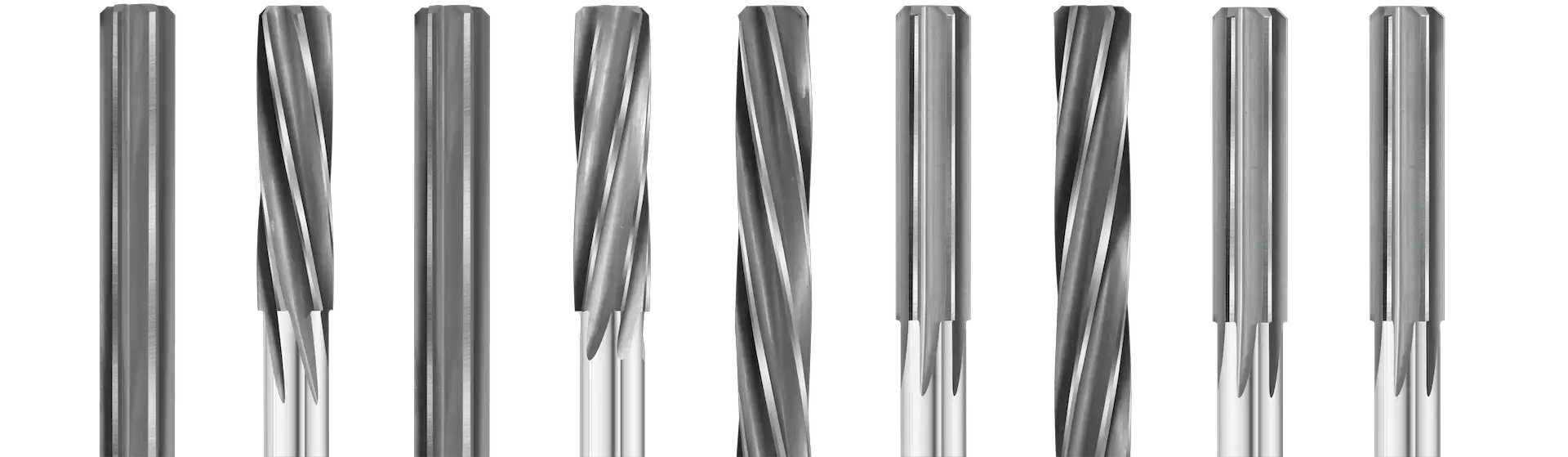
Choose from Fullerton’s selection of carbide reamers with Just-In-Time offering that includes manufacturing any size reamer within 24 hours.
Fullerton’s carbide reamers are designed for numerous reaming applications and for a variety of materials including titanium, super alloys, hardened steels, stainless steels, steels, cast iron, graphite, brass & copper, hi silicon aluminum, low silicon aluminum, composites, plastics, and wood. Reamers are manufactured to support customers in numerous industries, including aerospace, automotive, heavy equipment, medical, and mold & die. Ready to ship within 24 hours! Sign up below for your own login at Fullerton Tools award winning website
0 Comments
edited by Bernard Martin Lexington Cutter has a put together a short checklist of the five most common problems for addressing reaming problems. If these don't fix your particular problem, get in contact with us and we'll send one of our application specialist in to give you a hand. 1) Poor Finish Possible Causes – Unequal chamfers, Incorrect margins, Excessive spindle runout, Chatter Possible Solutions – Regrind reamer with equal chamfer angle. Regrind reamer with narrow margins for reaming lower tensile materials. Increase reamer back taper (will lose size faster). Reduce speed and increase feed rate. Use power feed unless material is hard. Use right or left spiral fluted reamer. Grind secondary lead angle immediately back of 45° chamfer. 2) Oversize Hole - Taper Hole - Bell Mouth Hole - Poor Finish Possible Causes – Misalignment, Insufficient, cutting action Possible Solutions – Use bushing – .0002″/.0003″ over reamer diameter. If hole location varies, use floating reamer holder. Increase reamer back taper (will lose size faster). Specify reamer with positive radial rake to reduce cutting pressure – may produce slightly larger diameter holes. 3) Excessive Tool Wear Possible Causes – Insufficient stock for removal, Excessive reaming pressure, Misalignment Possible Solutions – Decrease previous operation drill size to allow more material for removal by reamer – leave about 3% of hole diameter for cast iron and more stock for non-ferrous materials. Increase feed rate. Reduce stock to be removed by increasing previous operation drill size – leave about 3% of the hole diameter. See Problem #2 4) Crooked Holes Possible Causes – Not drilled straight Possible Solutions – Correct previous drilling operation – reamer will follow the drilled hole. Increase reamer attack angle (chamfer) to 120°/180° included angle. 5) Tool Breakage
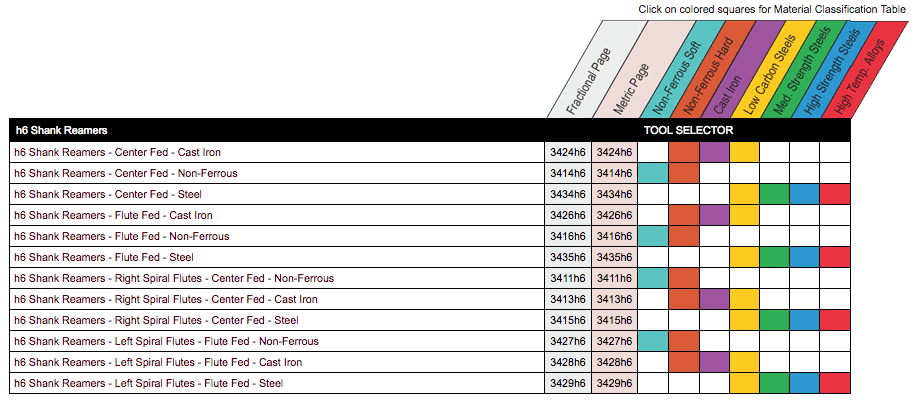
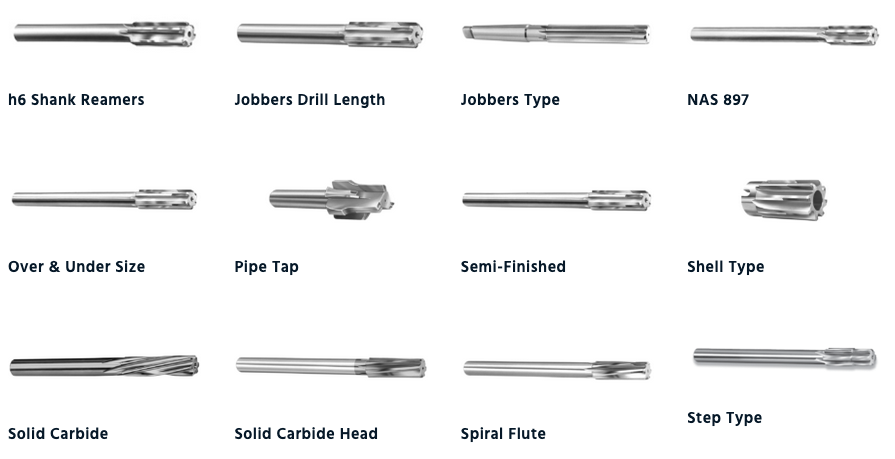
Possible Causes – Excessive reaming pressure, Misalignment Possible Solutions – Reduce stock to be removed – See Problem #3 – See Problem #2 Our last post about Lexington Cutter Offers h6 Shank Reamers prompted some questions regarding what exactly is an"h" tolerance, so this post should help you understand it a bit more.
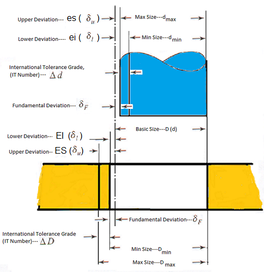
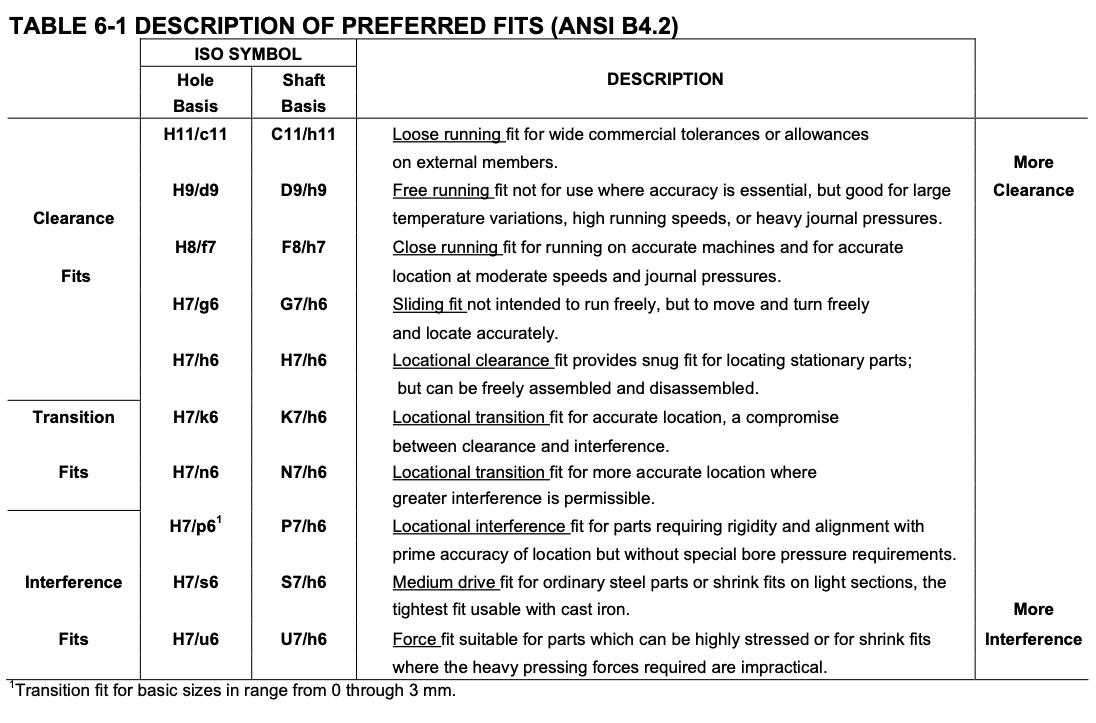
"The ISO System of Limits and Fits is a coordinated system of hole and shaft tolerances for engineering and manufacturing used for cutting tools, material stock, gages, etc. If held to these tolerances, cutting tools, material stock, and gages are available throughout the world"1 ISO and ANSI both group fits into three categories: clearance, location or transition, and interference. Within each category are several codes to define the size limits of the hole or shaft - the combination of which determines the type of fit.2 Upper vs Lower Case The tolerance symbol is established by combining the IT grade number and position letter for tolerance. The first thing to understand is the difference between a capitol "H" and a lower case "h". The upper case "H" is used to designate bore tolerance while the lower case "h" is used to designate shaft tolerances. Tolerances with lower case “h” are (minus) negative. Said another way, the capital letter "H" is for the hole, and lower case letter "h" is for the for shaft. The Number The number following the letter "h" denotes the International Tolerance (IT) grade. So, a tolerance with the number 6 will have a larger tolerance range than the number 5 but a smaller tolerance range than the number 7. This range is based on the size of the shank. A hole that has a 0.030” diameter will have an h6 tolerance of (+0.0000,-0.0002), while a 1.00” hole with have an h6 tolerance band of (+0.0000,-0.0005). Click the link below for a Shftt Tolerance Calculator. 1. Metric Standards for Worldwide Manufacturing, 2007 Edition Knut O. Kverneland
2. Shaft tolerances are now covered in the new ANSI B32.100- 2005 standard In January of this year we welcomed a new member to our Browne & Co. sales team and with manufacturing companies opening up again, it's about time we introduce you to Jeff Terrace!
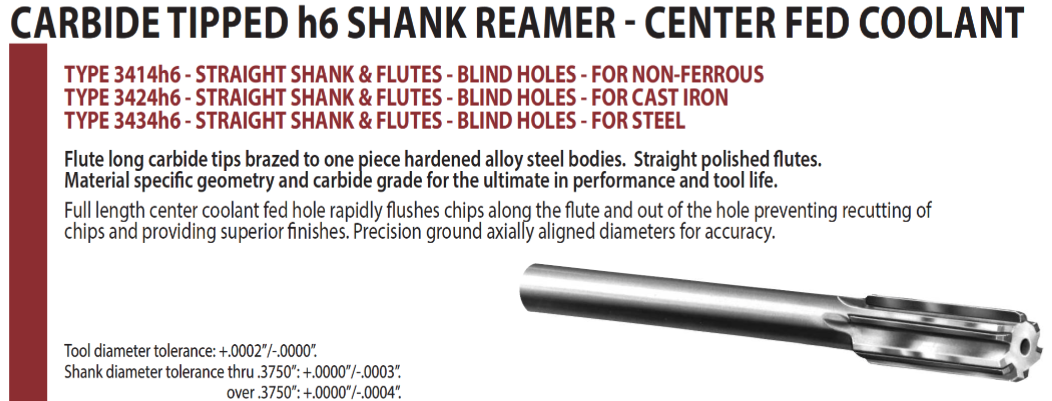
Just before joining Browne & Co in January 2019, Jeff worked at Hoffmann Group, a German cutting tool, hand tool, workstation and storage solutions manufacturer. Jeff has been working as an InovaTool representative since February of 2019 and recently joined Browne & Company at the beginning of 2020 as our Cutting Tool Specialist. Please send Jeff and email or give him a call to introduce yourself or pick his brain about an application question. Lexington Cutter, Inc. is excited to present our new Precision Coolant Chucking Reamers with h6 shank tolerances. At Lexington we strive to stay ahead of the competition in technology, product advancement, manufacturing processes, pricing, and delivery. Lexington's new flyer continues to provide competitive pricing throughout the market. Lexington's commitment continues to provide you with superior products that will keep you a cut ahead of the competition. Listed below are some features of the new reamer:
Download pdf fliers of Carbide Tipped h6 Coolant Fed Reamers
Lexington Cutter, Inc. is excited to present their new Precision Coolant Chucking Reamers with h6 shank tolerances. Lexington Cutter strives to stay ahead of the competition in technology, product advancement, manufacturing processes, pricing, and delivery.
Their new flyer continues to provide competitive pricing throughout the market. Lexington Cutter's commitment continues to provide you with superior products that will keep you a cut ahead of the competition. Listed below are some features of the new reamer:
|
AuthorWe've compiled the latest news and technical information about our principals and our market that we hope you find informative! Archives
January 2026
Categories
All
|
RSS Feed