|
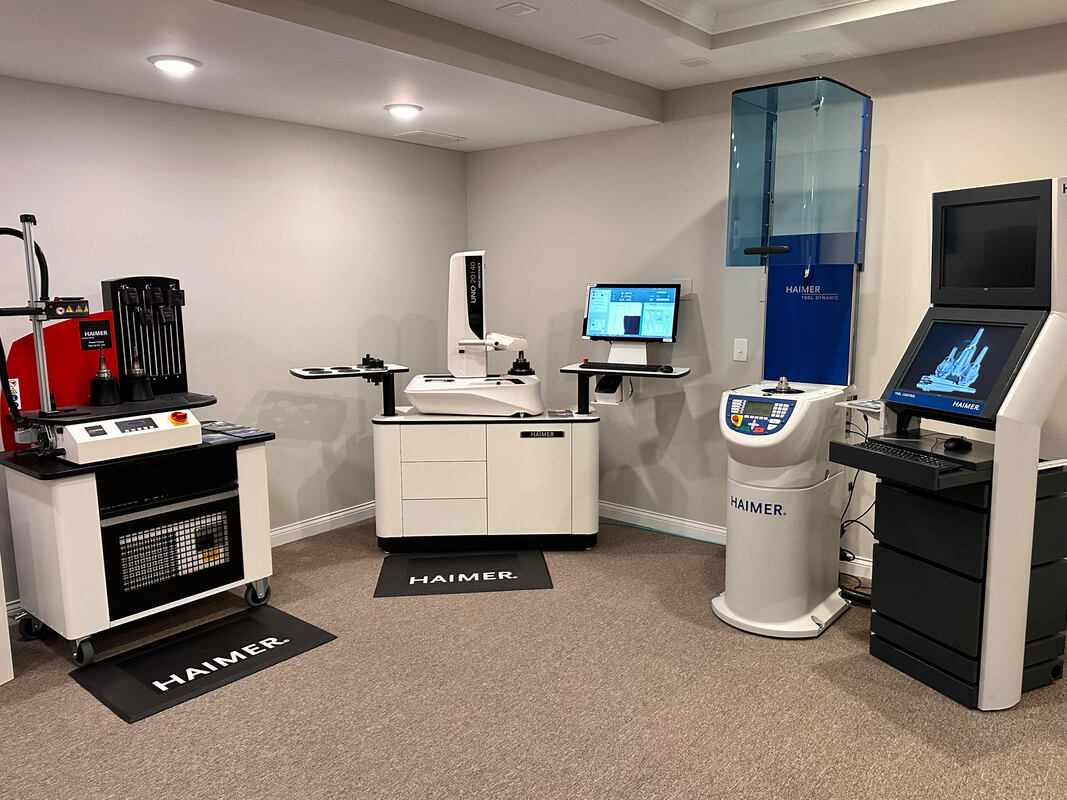
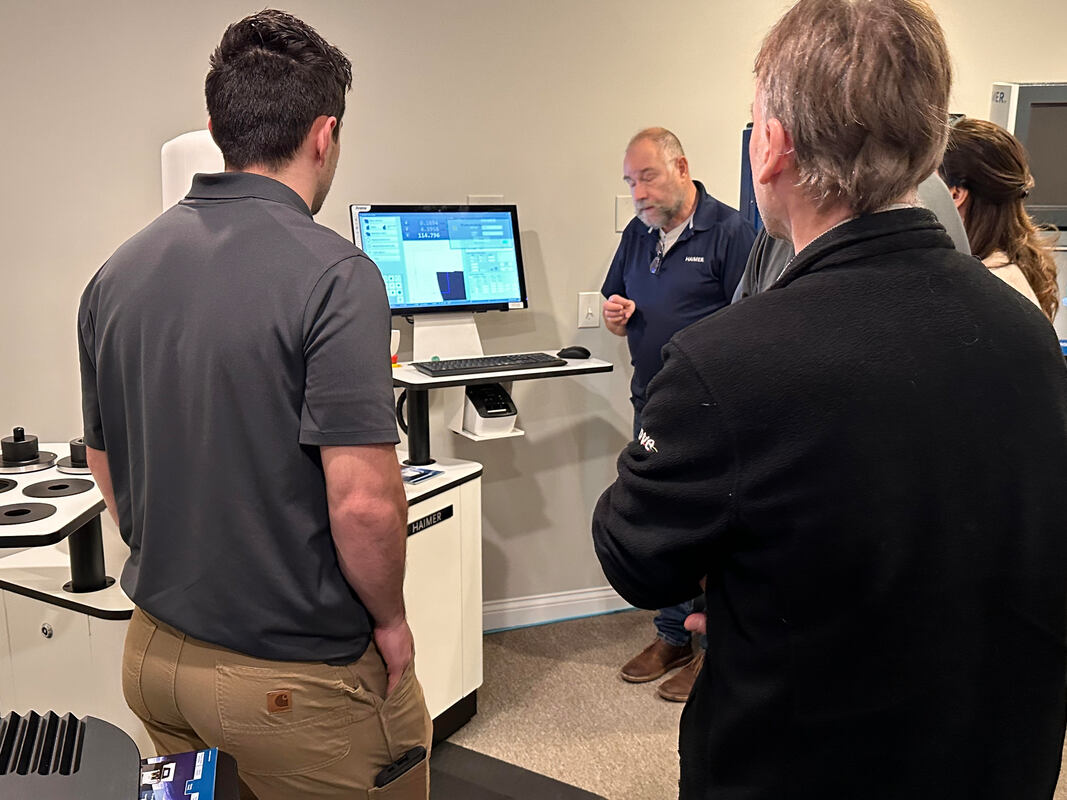
Innovative Facility Showcases the Latest in Metalworking Precision and Efficiency Chardon, OH. - Browne & Company, a leader in the metalworking industry, is proud to announce the grand opening of its new Metalworking Technology Center in Northeast Ohio. This state-of-the-art facility is set to revolutionize the metalworking sector with its cutting-edge technology and tooling, provided by the renowned Haimer presetting and shrink fit tooling. You can also find the latest high performance cutting tools displayed from Fullerton Tool, Regal Cutting Tools, Rocky Mountain Twist Drill, The Everede Family of tooling, Dapra, and others. The Technology Center is designed to meet the growing demands for higher precision, efficiency, and performance in metalworking. It is equipped with the latest advancements in Haimer technology and tooling, ensuring consistent set-up, unsurpassed machining accuracy, better tool life, and improved part finishes. The center represents a significant investment in innovation and demonstrates Browne & Company's commitment to advancing the metalworking industry. "We are excited to unveil our new Technology Center, which symbolizes our dedication to providing the best in metalworking solutions," said Dave Browne, President of Browne & Company. "This facility not only showcases the latest in technology and tooling but also serves as a hub for innovation, collaboration, and education." The Technology Center boasts an impressive display of the latest high-performance cutting tools from leading manufacturers, including Fullerton Tool, Regal Cutting Tools, Rocky Mountain Twist Drill, The Everede Family of tooling, Dapra, and many others. These partnerships underscore Browne & Company's commitment to quality and excellence in providing comprehensive solutions to its clients. Industry professionals, clients, and partners are invited to explore the capabilities of the new Technology Center and witness firsthand the advancements in metalworking technology. Browne & Company is offering personalized demonstrations to showcase the benefits and efficiencies that their state-of-the-art technology and tooling can bring to any operation. "To see the future of metalworking, we invite you to visit our Technology Center. Our team is ready to demonstrate how our latest technologies and tooling can enhance your operations," added Browne. Schedule a Demonstration Don't miss the opportunity to experience the latest in metalworking technology and innovation. Click the button below to schedule a demonstration with our team and discover how Browne & Company can elevate your metalworking projects. About Browne & Company
Browne & Company has been at the forefront of the metalworking industry, offering innovative solutions and high-quality tooling to clients across various sectors. With a focus on precision, efficiency, and reliability, Browne & Company continues to lead the way in metalworking technology and services.
0 Comments
written, compiled and edited by Bernard Martin Class of fit for a cutting tap refers to the specific tolerance or fit that is desired between the threads of the tap and the threads of the hole it is being used to create. In other words, it defines how tightly or loosely the threads should mesh together. The class of fit is typically expressed using a combination of letters and numbers. The most commonly used standards for class of fit are the Unified Thread Standard (UTS) and the ISO metric thread standard. In the UTS, the class of fit is denoted by a combination of a letter and a number, such as 2B, 3A, etc. In the ISO metric thread standard, it is represented by a combination of a letter and a number, such as 6g, 4h, etc. For cutting taps, the class of fit is usually specified based on the intended application and the level of precision required. The class of fit can affect factors like the ease of assembly, the strength of the threaded connection, and the ability to engage the threads smoothly during tapping. A classification system exists for ease of manufacture and interchangeability of fabricated threaded items. Most, but certainly not all, threaded items are made to a UTS classification standard. This system is analogous to the fits used with assembled parts.
The letter suffix "A" or "B" denotes whether the threads are external or internal, respectively. Classes 1A, 2A, 3A apply to external threads; Classes 1B, 2B, 3B apply to internal threads Here are some common classes of fit for cutting taps:
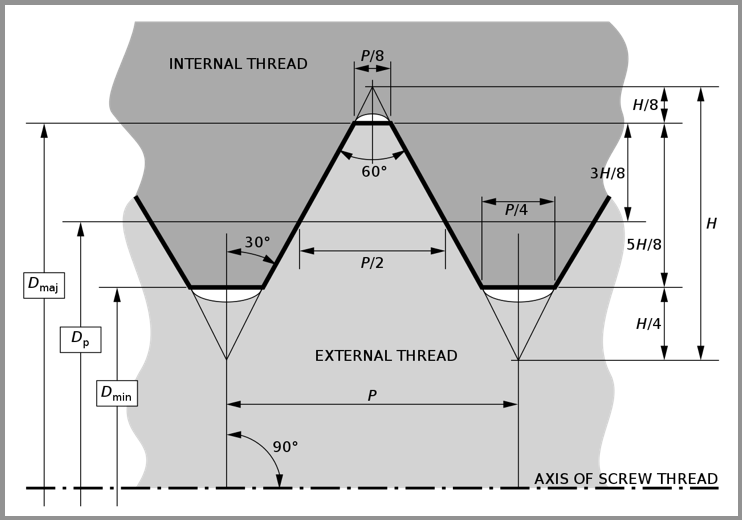
The standard designation for a UTS thread is a number indicating the nominal (major) diameter of the thread, followed by the pitch measured in threads per inch. For diameters smaller than 1⁄4 inch, the diameter is indicated by an integer number defined in the standard; for all other diameters, the inch figure is given.
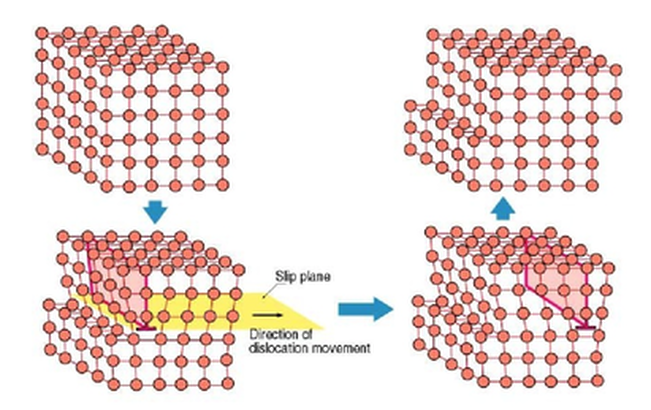
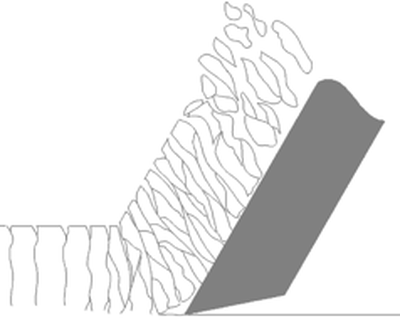
This number pair is optionally followed by the letters UNC, UNF or UNEF (Unified) if the diameter-pitch combination is from the coarse, fine, or extra fineseries, and may also be followed by a tolerance class. Example: #6-32 UNC 2B (major diameter: 0.1380 inch, pitch: 32 tpi) Contrary to popular terminology, metal is not “cut” as much as it is a “forced separation from itself.” To understand this, think of how molecules bond together. Molecules resemble our solar system with the nucleus represented by our Sun (or a carbon atom in the image) and the electrons represent by the various planets. When one molecule “bonds” with another it is as if two solar systems’ planets became intertwined into each others orbits with both solar systems sharing certain planets and making the whole larger than the sum if it’s parts. When we use a cutting tool we are inducing these bonds to break apart. The “machinability” of a particular metal partially defines how easily the material separates from itself. The basic mechanics of forming a chip are the same regardless of the base material. As the cutting tool engages the workpiece, the material directly ahead of the tool is sheared and deformed under tremendous pressure. The deformed material then seeks to relieve its stressed condition by fracturing and flowing into the space above the tool in the form of a chip. The important difference is how the chip typically forms in various materials. Regardless of the tool being used or the metal being cut, the chip forming process occurs by a mechanism called plastic deformation. This deformation can be visualized as shearing. That is when a metal is subjected to a load exceeding its elastic limit. The crystals of the metal elongate through an action of slipping or shearing, which takes place within the crystals and between adjacent crystals. Type 1: Discontinuous ChipCast Iron, Hard Brass and other materials that produce a Powdery chip. “Discontinuous Chip - Discontinuous or segmented chips are produced when brittle metal such as cast iron and hard bronze are cut or when some ductile metals are cut under poor cutting conditions.
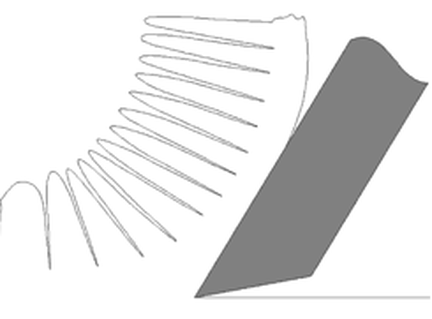
Type 2: Continuous ChipMedium to High carbon and alloy Steels – Long Chipping Materials “Continuous Chip - Continuous chips are a continuous ribbon produced when the flow of metal next to the tool face is not greatly restricted by a built-up edge or friction at the chip tool interface. The continuous ribbon chip is considered ideal for efficient cutting action because it results in better finishes. Unlike the Type 1 chip, fractures or ruptures do not occur here, because of the ductile nature of the metal.”
Type 3: Sheared ChipsLow carbon Steels, Stainless Steels, Nickel Alloys, Titanium, Copper, Aluminum and other soft, “gummy’ Materials. Sheared Chips or as some refer to it “Continuous Chip with a Built-up Edge (BUE). The metal ahead of the cutting tool is compressed and forms a chip which begins to flow along the chip-tool interface.
These metals readily deform in front of the cutting edge and have to be "sheared" by the tool. What the above paragraph doesn’t tell you is that these materials require tools with sharper cutting edges than those used for machining cast Iron or higher carbon content Steels. The chips tend to compress onto the face of the tool which can result in built-up edge.
The chips formed when cutting these metals are thicker than those produced by Medium Carbon or Alloy Steels at the same Feed Rates and Depths of Cut. These thicker chips are stronger and harder to break. Destiny Tool, through a combination of rake face geometry, carbide substrate and concentricity tolerance is able to enable the chip to more readily "separate from itself" which not only improves MRR, but also reduced heat into the end mill and thereby extends tool life as the feed rate increases. High strength metals such as Stainless Steel, Nickel Alloys and Titanium generate high heat and high cutting pressures in the area of the cutting edge. This results in reduced tool life compared to easier to machine materials.
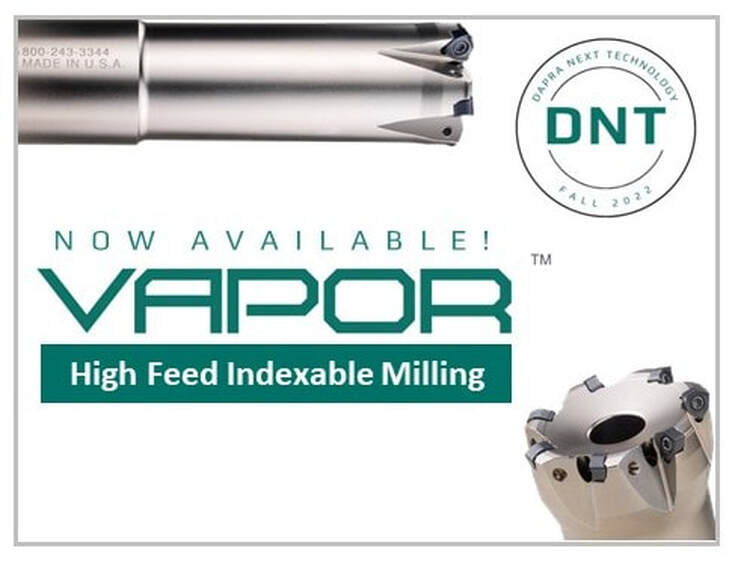
VAPOR™ is a high feed indexable mill that maximizes metal removal rates. Utilizing light depth of cut (DOC) combined with extreme feed per tooth (FPT) to increase productivity. Dapra Corporation has announced the DAPRA Next Technology - High Feed Indexable Milling Platform - "VAPOR™ powered by TRI-X2". VAPOR™ is ideal for extreme machining. The VAPOR™ platform has unique elements in body design and TRI-X2 insert geometry for higher metal removal rates and extended tool life. The design is created for lighter, faster cutting and versatility through positive cutting geometry and excellent ramping capability. It's designed with a new double-sided insert series for lower cost per usable cutting edge. Inserts are installed with a large insert screw for longevity and easy indexing. This makes the advanced design highly shock resistant through-hardened steel.
CHARDON, OH - Browne & Co is excited to announce that they begin representation of Dapra Corporation products in December 2022.
Dapra specializes in the design, service, and support of American-made, high-performance indexable carbide milling tools for a broad range of operations. Dapra Corporation is a U.S.-based, multi-generation family-owned parent company to multiple brands which provides high-quality engineered solutions for various manufacturing and industrial markets. From indexable cutting tools to permanent part marking equipment Dapra Corporation continues to develop and invest in solutions to empower the success of manufacturers across North America. For over 65 years Dapra has provided milling, workholding, and power tool solutions to a wide array of manufacturing segments including aerospace, automotive, mold and die, and firearm. With their proven high-performance solutions combined with industry-leading application expertise and a robust distribution network Dapra has earned the trust of businesses from around the world. From small workshops to globally diversified manufacturers, they are more than a supplier, they are a partner in yours and our success. According to David Browne at Browne & Co., "At our core we have always had a very strong presence in CNC milling products. We're at the spindle. Dapra really matches what our company does and we're excited to launch into 2023 with Dapra's high performance milling products." Browne & Co. is excited to work with our customers with these premiere products that include:
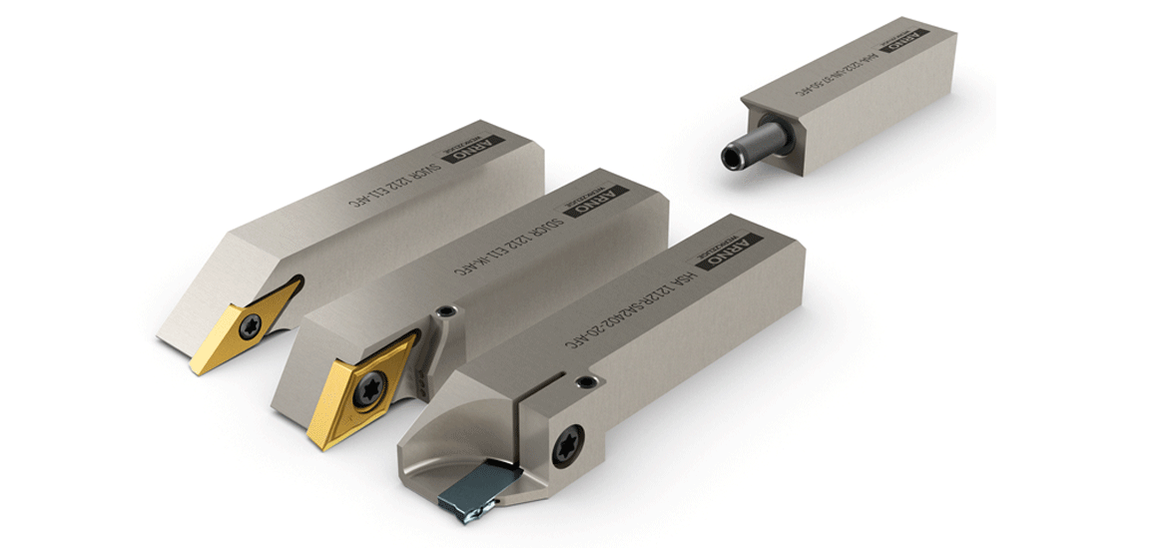
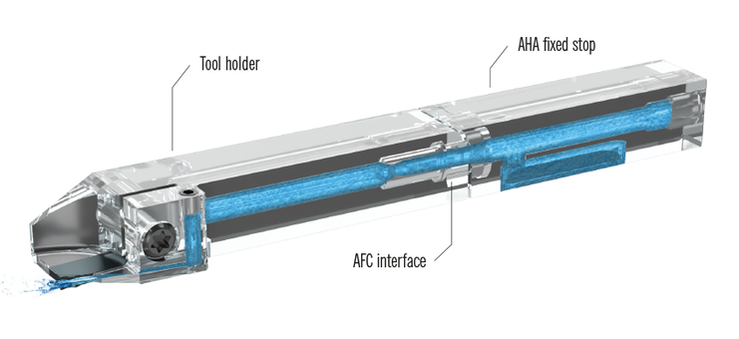
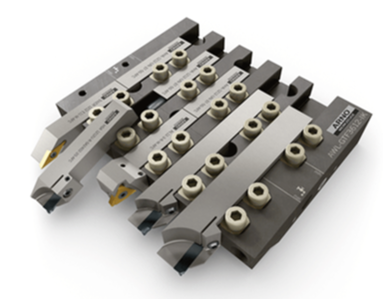
AFC tool holders: the revolution in fast tool changes – patent applied The ARNO FAST CHANGE system is a complete quick change solution for your Swiss machine. It consists of a through coolant gang plate that acts like a manifold, so all of the coolant is delivered behind the scenes. It's your solution for easy tool changes despite limited space in Swiss type machines: The two-part AFC holder – even untrained staff can replace tools fast and reliably. This is how it works: The rear part of the tool holder (AHA fixed stop) is first fixed in place. Only the front part is removed to replace the tool. This eliminates the need to restart and recalibrate the zero point since the length to the insert tip is always the same – whether the grooving system or the turning system is used.
The through coolant split shank tools will reduce your tool swap time to a minute or less. This is an innovative system that is engineered and manufactured in Germany solely to keep your spindles running and dropping more finished parts per shift. As of right now we have 51 gang plates in stock for: Citizen, STAR, Hanwha, Tsugami, KSI Swiss, DMG Mori, Nexturn and Tornos. To learn more, click the button below:
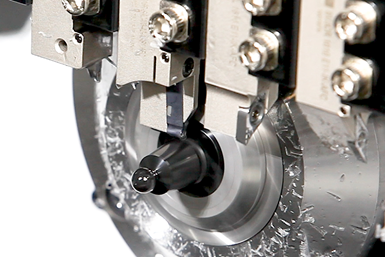
Appears in Print at Production Machining as: 'A Swift Tool Change for Swiss-Type Machines' This coolant-through tooling system replacement for the gang plate on a Swiss-type machine can save hours of spindle downtime per day as well as increase tool life and enhance chip control. While servicing the tools on a traditional platen on a sliding headstock lathe, it can take 10 minutes or more to index one insert. While indexing the tools, coolant spigots can get knocked loose by an operator and can cost a machine shop tool life and time. Once the inserts are indexed, it can take several starts and stops of the spindle for the operator to see if the coolant stream is being directed to where it needs to be.
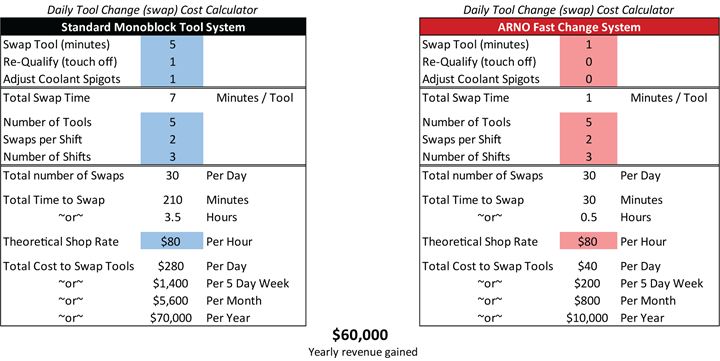
Arno’s Fast Change (AFC) tooling system consists of a gang plate that holds split-shank, coolant-through turning tools, parting tools and grooving tools. Designed like a manifold, the coolant is rerouted through the gang plate to the tools. The UN-style slot in the fixed stop picks up the coolant and runs it through the pipette to the front end where the coolant goes directly to the cutting edge. The AFC system can supply coolant to one port that supports all the tooling positions, or it can supply two ports and divide the tooling positions with the needle valve. The tooling system only needs to be plumbed once and, according to the company, after that, a high-pressure coolant line should not need to be touched again. With proper setup, the high-pressure lines are moved behind the machine guards, creating a clean machining environment. This enables operators to complete safer routine maintenance. Also, the AFC’s low-profile clamps do not collect as many chips compared with a typical clamping system. When replacing a split-shank tool, the operator simply loosens two clamps to remove the cutting head and then replaces it with a new one, the company says. Simple, Quick FunctionalityA Time and Money SaverUsing the AFC system, Arno reports that it takes 17 seconds to change a tool, a vast improvement to the typical 7 to 10 minutes it can take using a traditional gang plate. The conventional method might take five minutes to change a tool, a minute to touch the tool off and another minute to adjust the spigot, for instance.
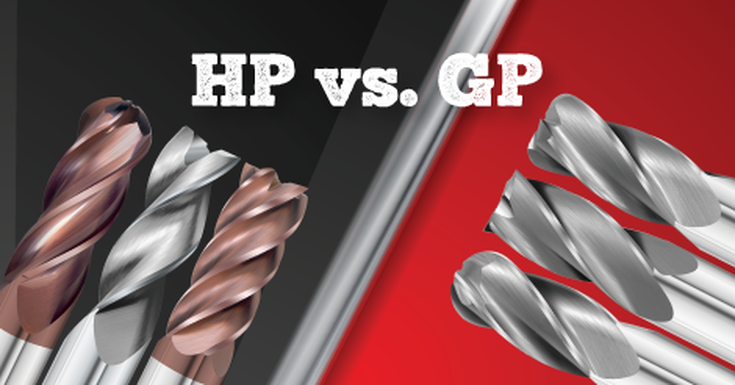
In comparison, when an operator is working with the AFC system, retouch is not necessary because the tool will repeat within plus or minus a thousandth of the previous tool positions. There is also no need to factor in time for readjusting coolant lines because the new system is a true, coolant-through system. It is also not necessary to factor in the clearing away of chips because those surfaces have mostly been eliminated with the smooth AFC design, according to Stroup. Therefore, the 17-second tool change time is the only time to factor in. But, for a real-world example, he increases the time to one minute to consider a distracted operator that might use extra seconds Although there are still 30 idle times per day, there are now only 30 minutes of downtime per day instead of 210 minutes using the traditional gang plate. “That only costs $10,000 per year, which means you’ve just made $60,000 a year on that one spindle by adopting the AFC system,” Stroup says. Guest Blog by Mark Donze at Fullerton Tool Have you ever wondered if you should purchase high-performance end mills or general-purpose end mills and what the benefit of purchasing one over the other is? If so, we have put together a list of factors to consider to help you make the right decision for next time. General Purpose End MillsFirst, let's discuss general purpose end mills. General Purpose (GP) End Mills are standard single, 2, 3, or 4 flute geometry end mills made for use in a wide variety of materials. Benefits of General Purpose End Mills:
High-Performance End MillsNext, High-Performance (HP) End Mills contain specialized geometries for a specific material being cut. Benefits of High-Performance End Mills:
With this information in mind, if you are a company that does small runs in a wide variety of materials you may prefer GP end mills. Whereas, if you are making high-volume parts where cycle-time and up-time are king, you may prefer an HP end mill for your use. Remember, there are no hard lines drawn. Each application is different and preference is ultimately up to you, the end-user.
If you aren't sure, you can contact your Fullerton authorized distributor to help make this decision. We will work with you to get the end results you desire with a wide variety of both GP and HP end mills available. We even have some tooling where we apply HP coatings to GP tools to help you get the most out of your cutting tool investments. We have a huge selection of inventory items and of course, if you need a special tailored tool to your specific needs, we have engineering and application knowledge to get the most out of your cutting tool budget. We also have resources on our website to help you navigate which tool is the best for your needs. Discover what end mills are recommended for your material and application by using the Fullerton Tool End Mill Selection Guide You can also explore and search for tooling by material, application, or tool specs as well as recommended speeds and feeds by series which you can access at the search button below. Stop going back to your machine tool manufacture to order replacement wear parts like bellows, way covers, steel cover replacement wipers, way wipers, etc. You are paying WAY too much and waiting WAY too long.
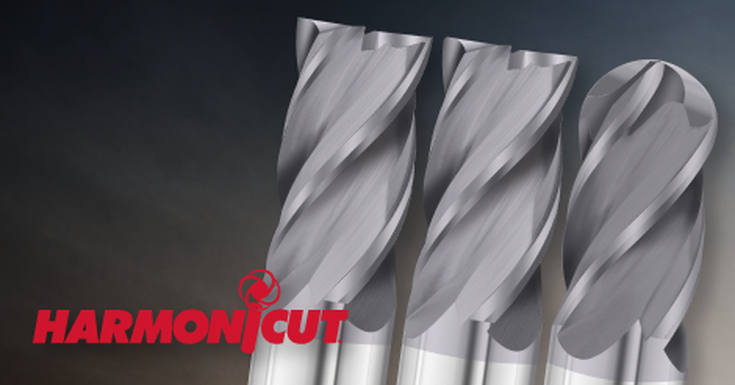
Introducing PIM - Products In Motion out of Rock Falls, Illinois. With over 40 years of manufacturing experience, the PIM team is dedicated to producing the highest quality product and providing the best service in the nation. Contact the Browne & Company team for more information, or click the button below. by Steven Oszust Jr. at Fullerton Tool This month we will focus on one of our most successful legacy tools, the Fullerton Tool's 3400 Harmon-i-Cut end mill. Nearly two decades ago, we recognized the advancements in machining technology demanded increasingly aggressive machining operations to enhance productivity and reduce production costs.
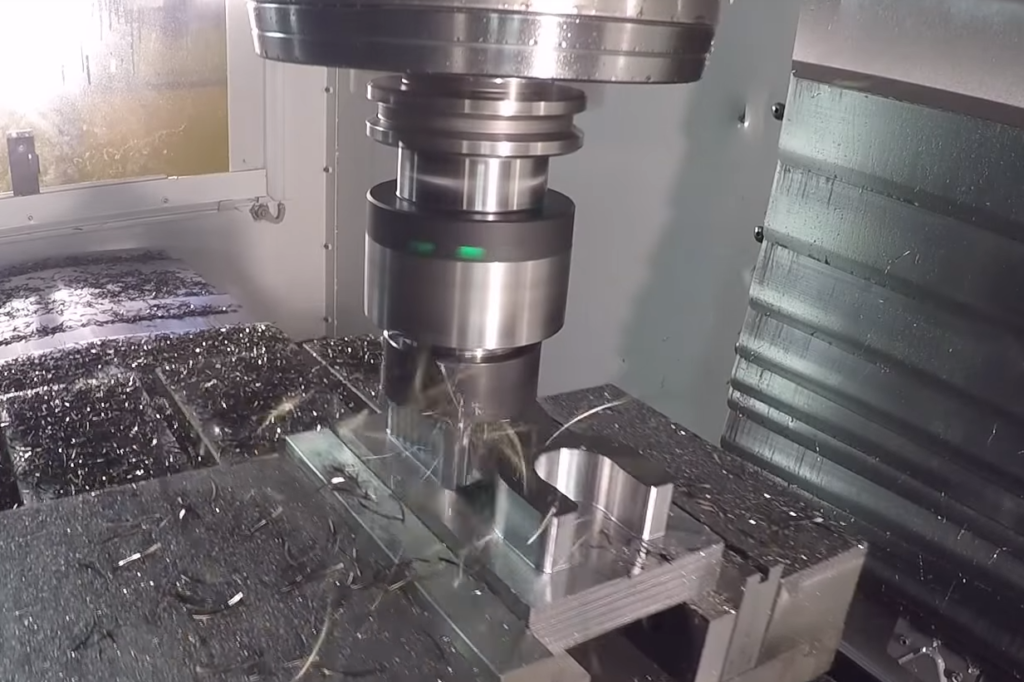
Advancements in spindle technology enabled greater spindle speeds while maintaining the necessary power to perform more aggressive cutting operations. With the greater acceptance and application of high-speed machining (HSM) practices in programming, spindle speeds were increased to a range which was greater than those traditionally used for an increase in material removal rates (MRR) over traditional tools. High-speed machining is achieved by increased axial depth of cut and higher spindle speeds, combined with constant chip loads requiring new high-performance tooling design. One limitation in achievable MRR is self-excited vibrations of the cutting tools, known as chatter. Chatter is caused by variations in the inconsistent chip thickness caused when the vibration of the tooth currently engaged in the cut is out of phase with the vibration of the previous tooth. Specifically engineered geometries greatly reduce chatter leading to smoother running, faster feed rates. These tools are ideal for all roughing and finishing operations, offering longer tool life and improved surface finishes. Harmon-i-cut end mills have engineered flute shape designed for maximum rigidity, variable helix, variable rake, superb chip evacuation, and excellent shearing action. Reduced load pressures and super stiff design promotes less chatter, achieving rapid Harmonic-free stock removal at rates never seen before. By utilizing chip thinning strategies, significant increases in productivity and tool life can be achieved. These methods are also helpful when using machines with less power and stability. Even with weaker machines and less stable working conditions, very high cutting parameters can be achieved. These strategies are particularly effective for increasing process reliability in difficult to machine materials or challenging applications. Consider Fullerton Tool's 3400 series Harmon-i-cut a cut above the rest. With our vast inventory of sizes and configurations, we can provide a solution for your needs. Contact Browne Sales to get started |
AuthorWe've compiled the latest news and technical information about our principals and our market that we hope you find informative! Archives
August 2025
Categories
All
|
RSS Feed